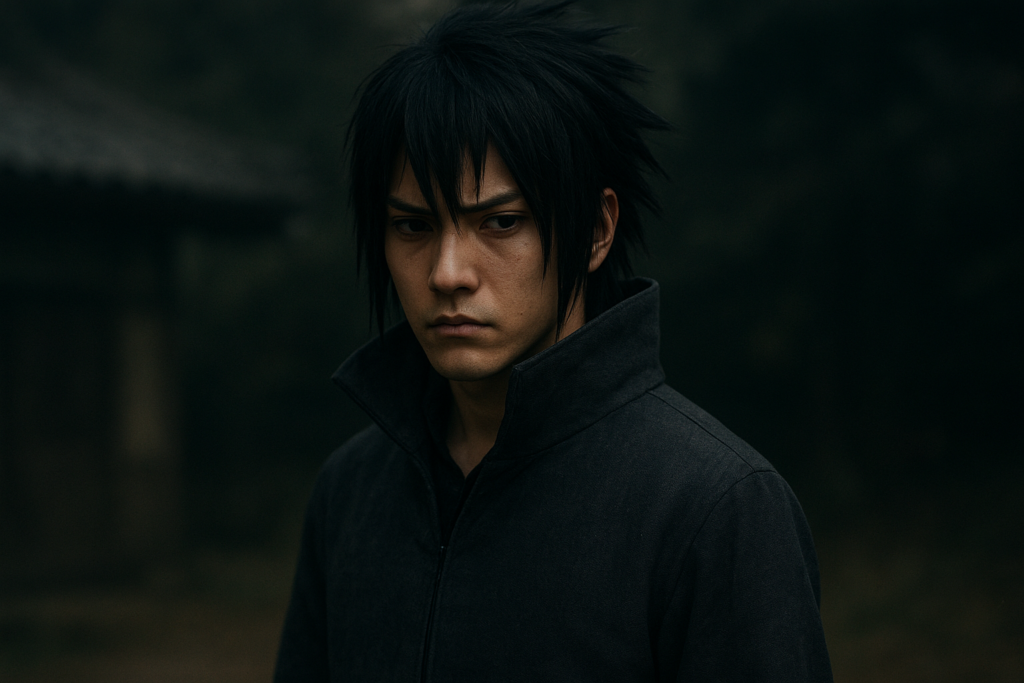
Within the grim and brutal world of Attack on Titan, few characters command as much respect and intrigue as Levi Ackerman. His presence is a paradox of icy detachment and profound, if silent, loyalty. While many characters are defined by their grand ideals or tragic pasts, Levi’s psychology is carved from a different stone. He is a study in hyper-competence forged in trauma, a man whose entire being is a weapon honed for survival and a specific, unglamorous form of duty. Analyzing Levi is less about understanding what he fights for in a broad sense, and more about deciphering the intricate psychological machinery that allows him to function as humanity’s strongest soldier while carrying immense, unspoken burdens. This analysis will explore his narrative function, his subversion of classic archetypes, and provide a psychological profile using the Big Five personality traits to understand the man behind the legend.
Narrative Analysis
Levi Ackerman functions as the narrative’s ultimate stabilizer and reality check. In a story filled with passionate, often recklessly idealistic characters, Levi operates on a different wavelength. His primary motivation is not rooted in abstract concepts of freedom or revenge, but in a brutally pragmatic calculus: minimizing loss and completing the mission. This stems from a core internal conflict between his innate humanity and the psychological conditioning required to survive his horrific upbringing in the Underground. He is not devoid of emotion; rather, his emotions are channeled into a cold, focused efficiency. His dynamics with others are defined by this principle. He leads not through inspiration, but through uncompromising expectation and a demonstrated willingness to shoulder the worst burdens himself. His relationships, particularly with Erwin Smith and later with his squad, are built on a foundation of silent, earned trust and a shared understanding of sacrifice, making his moments of vulnerability—often expressed through action rather than words—exceptionally powerful narrative pivots.
Archetypal Analysis
Levi Ackerman is a compelling fusion and subversion of two primary archetypes: the Warrior and the Guardian. At first glance, he perfectly embodies the ultimate Warrior—a peerless combatant whose skill is unparalleled. However, the classic Warrior is often driven by honor, glory, or a thirst for battle. Levi subverts this; his combat prowess is a tool, not an identity. He derives no pleasure from fighting and sees it purely as a necessary, grim task. This is where the Guardian archetype emerges more dominantly. His true role is that of a protector, though his methods are ruthlessly pragmatic. He guards humanity’s survival, his squad’s lives, and later, the legacy and final orders of his commander. This Guardian is not a gentle shield, but a razor-edged gatekeeper who makes horrific choices to protect what he can. He evolves from a solitary, distrustful survivor into a leader who, despite his abrasive exterior, systematically places himself between danger and those he is sworn to protect, ultimately sacrificing his own body and peace for a future he may not live to see.
Psychological Profile: Big Five Personality Traits
Openness
Scale: low to moderate
Levi demonstrates low openness to experience in the realm of abstract ideas and unconventional thinking. He is deeply pragmatic, skeptical of grand, untested plans, and prefers methods with proven, tangible results. His personality structure is rigid and built for efficiency, not exploration. However, his openness is not nonexistent. He shows a moderate capacity for experiential openness when presented with undeniable evidence, as seen in his willingness to follow Erwin’s visionary, high-risk strategies once their logic is proven. His adaptability is tactical, not ideological, focused on practical problem-solving within his immediate environment.
Conscientiousness
Scale: very high
This is arguably Levi’s most defining trait. His life is a monument to order, discipline, and an almost obsessive sense of duty. His cleanliness is a famous manifestation of a deep-seated need for control in a chaotic world. In terms of behavioral consistency, he is relentlessly reliable. Every action is deliberate, every order precise. His high conscientiousness drives his unparalleled skill, his leadership style, and his profound sense of responsibility for the outcomes of his missions and the lives under his command. He holds himself to a standard far exceeding anyone else’s.
Extraversion
Scale: very low
Levi is a quintessential introvert. He gains no energy from social interaction and is most focused and effective alone or in small, familiar units. His social behavior is terse and functional. He does not seek camaraderie for its own sake, and his quiet demeanor is often misinterpreted as coldness. This low extraversion is a key component of his character motivation; his drives are internalized, stemming from personal codes and private loyalties rather than a desire for social approval or collective fervor.
Agreeableness
Scale: low
Levi scores low on agreeableness, particularly in facets like straightforwardness and compliance. He is blunt, critical, and shows little concern for soothing egos or following social niceties. His communication style is optimized for speed and clarity, not warmth. However, his low agreeableness is not synonymous with a lack of compassion. His emotional intelligence is acute but applied differently; he understands fear, pain, and weakness intimately, which is why he pushes others so hard—to overcome those very things. His profound loyalty to a select few reveals a capacity for deep, if severely rationed, affiliative bonds.
Neuroticism
Scale: low
Despite a traumatic past and constant high-stakes pressure, Levi exhibits remarkably low neuroticism. He displays exceptional emotional stability under stress, rarely showing panic, anger, or despair in crisis situations. This isn’t emotional repression in the typical sense, but a form of supreme self-regulation forged in extremity. His calm is a tactical asset. The volatility of his emotions is channeled into a few, intensely focused outlets—such as his vow to eradicate the Beast Titan—rather than general anxiety. His psychological resilience is his bedrock, allowing him to function where others would break.
Authorial Perspective
What I find most compelling about Levi is the profound humanity that his austere exterior conceals. He is often labeled as “cold” or “machine-like,” but this misses the point entirely. His psychology is a brilliant narrative construct: he is not a man who feels nothing, but a man who has systematized his feelings into actionable directives. Every cup of tea meticulously prepared, every order barked at his squad, every life-or-death decision is a manifestation of a care so immense and burdensome that it can only be expressed through ritual and result. He is the embodiment of “show, don’t tell.” His character arc isn’t about learning to feel, but about learning whom to feel for and how to bear the weight of those connections in a world designed to sever them. His is a story of devotion so absolute it becomes a kind of aesthetic, a philosophy of duty written in blood, sweat, and spotless floors.
Conclusion
Levi Ackerman’s enduring resonance lies in his brutal authenticity. He is a character whose psychological depth is revealed not in monologues, but in silences, actions, and a relentless commitment to a pragmatic form of care. He subverts the typical heroic archetype by being a warrior who hates war and a guardian who protects through preemptive violence. His Big Five profile paints a picture of a highly conscientious, introverted, and emotionally stable individual whose low agreeableness and openness are not flaws, but necessary adaptations to an unbearable world. Ultimately, Levi represents the psychological cost of true leadership in the face of existential horror—the cost of making impossible choices, of valuing results over comfort, and of measuring loyalty not in words, but in shared sacrifice. He is a testament to the idea that strength is not the absence of feeling, but the formidable architecture one builds to carry it.