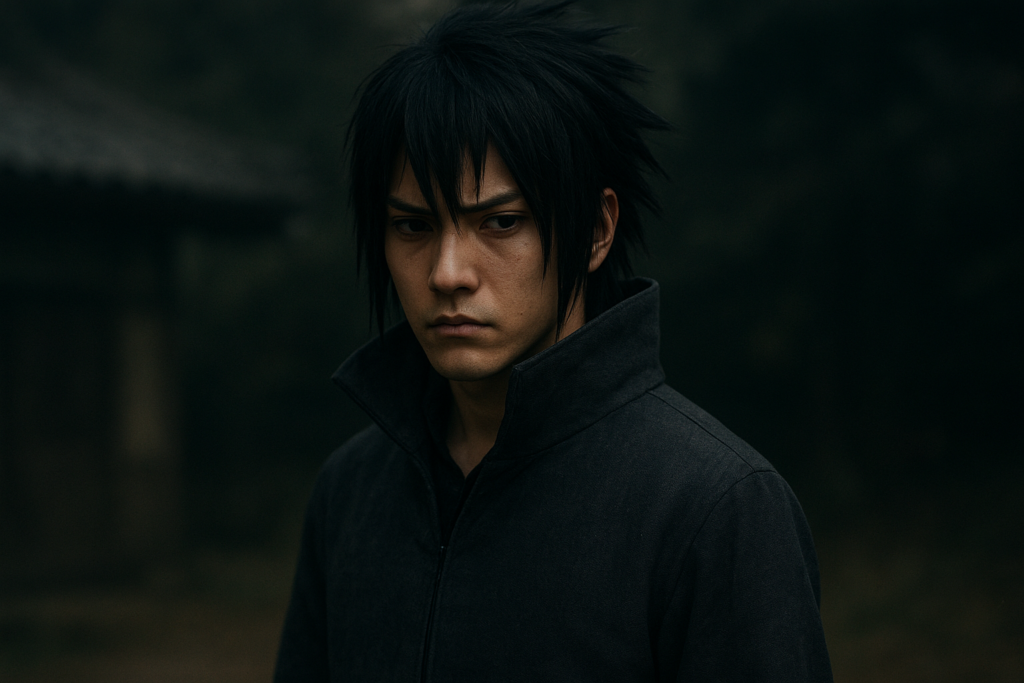
The Psychological Portret of Byakuya Kuchiki from Tite Kubo’s *Bleach* presents a masterclass in character evolution, built upon a foundation of rigid tradition and profound internal conflict. More than a stoic captain of the Gotei 13, Byakuya is a fascinating study of a man imprisoned by his own code, whose journey is defined by the painful reconciliation of duty, honor, and personal love.
His initial portrayal as an unyielding aristocrat gives way to a deeply complex figure, making him a cornerstone for analyzing themes of legacy, change, and emotional repression. This analysis will explore his narrative function, archetypal roots, and a detailed psychological profile using the Big Five personality framework to understand the man behind the icy demeanor.
Narrative Analysis
Byakuya Kuchiki’s primary narrative function is to serve as the living embodiment of the Soul Society’s ancient laws and the aristocratic Kuchiki clan’s unassailable honor. He is not merely an antagonist in the Soul Society arc; he is the personification of the system Ichigo Kurosaki must challenge. His conflict is internal, a clash between the rigid vows he swore to uphold and the latent, suppressed love he holds for his adopted sister, Rukia.
His motivation is initially pure and terrifying in its simplicity: to execute Rukia to fulfill his duty to both the law and a deathbed promise to his wife, Hisana. This creates a powerful dramatic irony. The audience understands his actions are driven by a twisted sense of protection and honor, while the characters see only cold cruelty.
This internal conflict is the engine of his character arc. His defeat by Ichigo is not just a physical loss but a symbolic shattering of his worldview. The inviolable rules he built his identity upon are proven fallible by an outsider’s sheer will. This defeat forces Byakuya to begin a painful recalibration.
His subsequent character development is not a sudden reversal but a gradual thawing. He begins to prioritize the spirit of protection over the letter of the law. This is seen in his later actions, such as secretly aiding Rukia and Ichigo, and his ultimate willingness to defy the Soul Society’s central authority during the Quincy invasion.
His dynamics with other characters are mirrors to his internal state. His relationship with Renji Abarai evolves from one of master and subordinate to one of respected comrades, reflecting Byakuya’s growing acknowledgment of merit over pure birthright.
His interactions with Ichigo shift from disdainful opposition to grudging respect and, eventually, a form of silent partnership. Each relationship charts a different facet of his journey from isolated aristocrat to integrated leader.
Archetypal Analysis of Byakuya Kuchiki
Byakuya Kuchiki begins his narrative firmly entrenched in the Ruler and Guardian archetypes. As the head of one of the five great noble houses, his entire existence is structured around control, order, and the preservation of tradition. He is the ultimate guardian of the Kuchiki legacy, viewing any deviation from its strict codes as a existential threat.
This archetype is powerfully intertwined with the Shadow archetype, not as a villain, but as the repressed emotional self he denies. His coldness, adherence to rules, and emotional distance are a shadow cast by his deep, unspoken love and grief. His commitment to law is a shield against the chaos of personal feeling.
His character arc is a journey toward integrating these archetypes, evolving into the Wise King or Benevolent Ruler. The catalyst for this evolution is the Hero archetype embodied by Ichigo. Ichigo’s disruptive, heart-driven actions force Byakuya to confront the limitations of his rigid worldview.
The subversion lies in the fact that his transformation is not about abandoning his core archetypes but refining them. He does not stop being a Ruler or Guardian; he redefines what he rules over and what he seeks to guard. His duty expands from blind loyalty to a system to the protection of the individuals who give that system meaning.
Key archetypal symbols associated with him reinforce this:
- The Kuchiki Clan Crest: Represents the immense weight of tradition and identity he carries.
- Senbonzakura (Cherry Blossoms): Symbolizes both breathtaking beauty and lethal, indiscriminate power, mirroring his elegant yet deadly nature.
- The Scarf from Hisana: A private, physical token of his love and guilt, hidden beneath his armor, representing his concealed humanity.
This archetypal journey from rigid Guardian to integrated Wise King is what makes his story resonate. It is a classic, yet deeply personal, tale of a man learning that true strength includes the capacity for compassion and change.
Psychological Profile: Big Five Personality Traits of Byakuya Kuchiki
Applying the Big Five model to Byakuya reveals a personality structured around extreme control, where high Conscientiousness and low Extraversion/Agreeableness create a formidable, isolated figure whose growth is measured by subtle shifts in these traits.
Openness
Scale: Low to Moderate
Byakuya exhibits very low openness in his early portrayal. He is deeply conventional, valuing established tradition, rules, and procedures over novel ideas or experiences. He dismisses Ichigo’s emotional appeals as irrational nonsense, showing a clear preference for the familiar structure of Soul Society law.
However, a moderate capacity for openness is revealed in his appreciation for subtle arts like the tea ceremony and his refined aesthetic sense, as seen in his zanpakuto’s beautiful yet deadly form. His major character growth is, in psychological terms, an increase in openness.
Following his defeat, he demonstrates a newfound willingness to experience and accept change, integrating new perspectives (like valuing heart over pure rule) into his existing worldview, a key sign of cognitive flexibility.
Conscientiousness
Scale: Very High
This is Byakuya’s dominant and defining trait. His entire life is a monument to discipline, order, and dutiful achievement. As a captain and clan head, he exemplifies extreme competence, self-discipline, and a goal-directed drive. His adherence to rules is not passive but an active, unwavering commitment.
This very high conscientiousness manifests as a powerful internal locus of control; he believes his fate and duty are his to command. His sense of responsibility is so immense it becomes pathological, leading him to choose duty over familial love, a decision that causes significant internal conflict.
His reliability and precision in battle are legendary, reflecting a mind that values careful planning and flawless execution above all else. This trait never diminishes, but its application evolves from serving an external code to serving a personal, moral imperative.
Extraversion
Scale: Very Low
Byakuya is a quintessential introvert. He gains no energy from social gatherings and is profoundly reserved. He speaks sparingly, and his social interactions are formal, distant, and transactional. He does not seek out companionship for its own sake and is often seen in solitude.
His leadership style is not charismatic or gregarious but based on respect, authority, and silent example. This low extraversion contributes to his aura of inscrutability and reinforces his emotional detachment, as he neither expresses nor seeks out emotional exchange.
It is important to note that his introversion is not shyness but a preference for a rich internal life and a deliberate maintenance of social boundaries that befit his status and personality.
Agreeableness
Scale: Very Low (initially), trending toward Low
Initially, Byakuya scores very low on agreeableness. He is uncompromising, skeptical of others’ motives, and places principle above compassion. He shows little altruism, trust, or modesty in his dealings, especially with those he deems beneath him or in violation of the rules.
His capacity for empathy is deeply buried, subsumed by his duty. However, his arc shows a gradual, slight increase in this trait. His later actions—apologizing to Rukia, acknowledging Renji’s strength, risking his status to protect others—demonstrate the emergence of altruism and trust.
This shift indicates a move from antagonistic low agreeableness to a more principled, reserved form. He never becomes warm or highly trusting, but he develops a protective empathy directed at his specific circle, aligning his actions with a deeper sense of fairness.
Neuroticism
Scale: Low
Byakuya exhibits remarkably low neuroticism. He is emotionally stable, calm under extreme pressure, and rarely shows anxiety, depression, or vulnerability. His demeanor is consistently poised and controlled, even in life-or-death battles. This stability is a cornerstone of his authority.
However, this low score is arguably a carefully constructed facade, a product of immense self-control rather than a lack of inner feeling. The volcanic guilt over Hisana and his conflict over Rukia suggest powerful emotions are present but rigorously suppressed.
His psychological defense mechanisms, particularly repression and intellectualization, are highly effective. He channels any potential emotional turbulence into unwavering focus on duty, making his few moments of visible emotion—such as his tears after his defeat—exceptionally powerful narrative events that reveal the cost of his constant control.
Authorial Perspective
From my perspective as an analyst, what makes Byakuya so compelling is the exquisite tension between his impeccable external presentation and his hidden internal turmoil. He is a character built on paradox: the most rigid man in the Soul Society undergoes one of its most meaningful transformations.
I find his growth more believable and impactful because it is so measured. He doesn’t become a different person; he allows a repressed part of himself to finally inform his actions. His apology to Rukia is a watershed moment not because it’s emotional, but because it’s so characteristically formal and precise—it’s an act of high conscientiousness applied to an emotional debt.
His value lies in demonstrating that strength can include vulnerability, that duty can be guided by love, and that tradition must sometimes bend to preserve its spirit. He is a testament to the idea that the strongest walls are those with a gate.
Conclusion
The Psychological Portret of Byakuya Kuchiki reveals a man whose identity was forged in the furnace of duty and grief, emerging first as an unyielding monument to law and later as a more integrated, humanized leader. His narrative journey from antagonist to ally is underpinned by a profound archetypal shift and a nuanced psychological profile defined by extreme conscientiousness and a gradual, hard-won increase in openness and agreeableness.
His resonance stems from this relatable core: the struggle to balance what we owe to others with what we owe to ourselves, and the painful, necessary process of re-evaluating the principles we once held absolute. Byakuya Kuchiki stands as a powerful reminder that even the most stoic facades can guard a deeply human heart, and that true honor is not in never changing, but in knowing what is worth changing for.