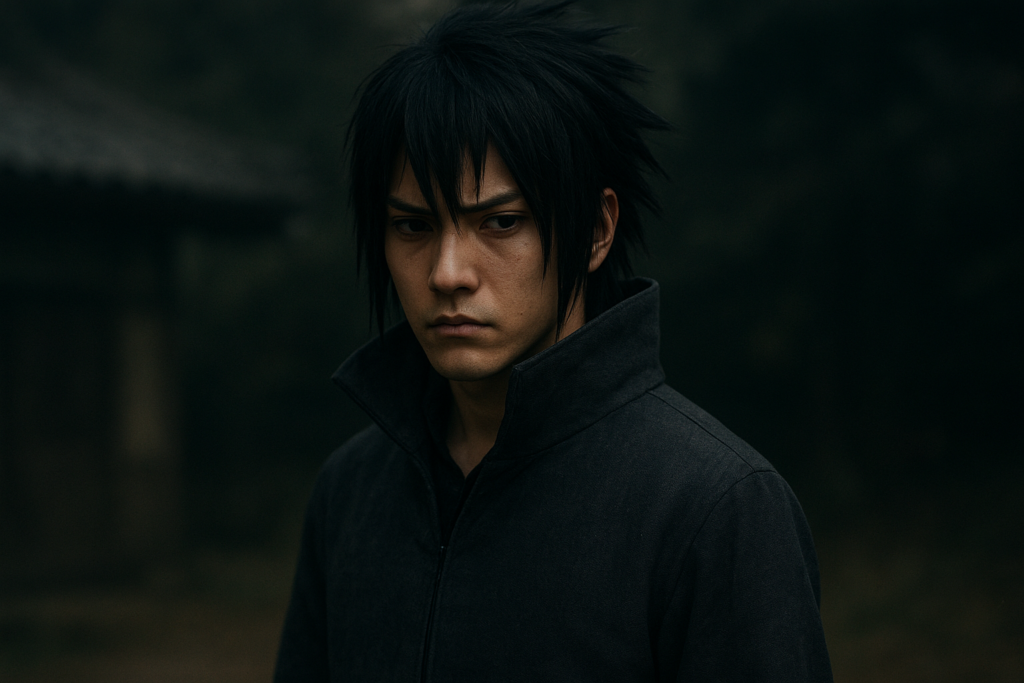
In the landscape of modern anime, few characters have sparked as much fervent debate and psychological dissection as Eren Yeager. His journey from a seemingly straightforward protagonist to a morally ambiguous, world-altering force presents a profound case study in character development. Analyzing Eren Yeager requires moving beyond simple labels of hero or villain; it demands an exploration of the intense internal and external pressures that forge and ultimately fracture an individual. His compelling nature lies in the terrifying authenticity of his transformation, a process driven by trauma, ideology, and a fatalistic interpretation of freedom. This analysis will delve into the narrative function of Eren Yeager, examine the archetypal patterns he embodies and subverts, and construct a psychological profile using the framework of the Big Five personality traits.
Narrative Analysis
Eren Yeager functions as the narrative’s volatile engine, a character whose singular, escalating motivation drags every other character and the entire world into his apocalyptic wake. His core narrative role is that of the catalyst, but one who is also the primary subject of the story’s central philosophical conflict. The narrative meticulously charts the corrosion of his initial, pure-seeming goal—seeking freedom and protecting his friends—into a genocidal absolutism. This is not a story of a hero’s journey but of a martyr’s complex weaponized on a global scale. His internal conflict evolves from a battle against external monsters to a war within himself, grappling with the predetermined future he witnesses and his own horrifying willingness to fulfill it. The dynamics he shares with characters like Mikasa and Armin are crucial, serving as the fading tether to his humanity; their relationships become the measuring stick for how far he has diverged from the boy they once knew, highlighting the tragedy of his self-imposed isolation.
Archetypal Analysis
Eren Yeager begins his story as a classic embodiment of the Hero archetype, driven by a clear sense of justice and a desire to eradicate the monstrous threat facing his home. However, his trajectory performs a radical and subversive inversion of this archetype. He gradually morphs into the Destroyer or Shadow, becoming the very existential threat he swore to defeat. This transformation is not a simple fall from grace but a deliberate, conscious embrace. More compellingly, Eren also embodies the Prophet or Fated One archetype, cursed with knowledge of future events. This foreknowledge perverts the traditional hero’s path, as his actions are taken with the chilling certainty of their outcome. He is a martyr who sacrifices not himself, but the world, for a twisted vision of salvation for his few loved ones, subverting the martyr archetype into something monstrous. His archetypal journey is a deconstruction of shonen protagonist tropes, arguing that an unwavering will, when coupled with absolute power and trauma, can create a tyrant rather than a savior.
Psychological Profile: Big Five Personality Traits
Openness
Scale: very high
Eren exhibits exceptionally high openness, particularly to experience and new, often radical, ideas. This is not a gentle curiosity but a relentless, consuming drive to understand the true nature of his world. From his childhood fascination with the world beyond the walls to his adult obsession with the cognitive framework of Eldian and Marleyan history, he actively seeks perspectives that shatter his existing worldview. His acceptance of the horrific future memories and his willingness to enact the Rumbling demonstrate an extreme openness to a destiny others would reject. This trait fuels his ideological shifts and his capacity to envision a reality so catastrophic it defies conventional morality.
Conscientiousness
Scale: high
Eren’s conscientiousness is channeled through an intense, almost fanatical, sense of purpose and goal-directed behavior. Once he commits to an objective—whether joining the Survey Corps, reclaiming Wall Maria, or initiating the Rumbling—he pursues it with meticulous, unwavering determination. His discipline in training and combat underscores this. However, this high conscientiousness is morally unmoored; it is dedicated entirely to his personal, fatalistic mission rather than to communal rules or ethics. His actions are planned and deliberate, reflecting a dark behavioral consistency aligned with his internal drive, not societal duty.
Extraversion
Scale: low
While initially passionate and outwardly expressive in his youth, Eren’s trajectory shows a steep decline in extraversion. His later persona is defined by introversion, isolation, and emotional withdrawal. He derives no energy from social interaction; instead, he deliberately distances himself from his closest companions. His communication becomes terse, cryptic, and manipulative, designed to push others away and ensure they follow the path he has foreseen. The boisterous, hot-headed boy is replaced by a quiet, brooding figure whose social engagement is purely instrumental to his grand, solitary design.
Agreeableness
Scale: very low
Eren scores profoundly low on agreeableness, manifesting as extreme antagonism, low compassion, and a stark lack of cooperativeness. His defining action—the global genocide of the Rumbling—is the ultimate act of disagreeableness. He shows minimal empathy for the countless lives outside his immediate circle, viewing them as an abstract threat to be eliminated. Even within his circle, he is hostile and cruel, deliberately damaging relationships to serve his ends. This low trait agreeableness is central to his character psychology, illustrating a complete prioritization of his ideological goal over altruism, trust, or social harmony.
Neuroticism
Scale: very high
Eren is dominated by very high neuroticism, specifically through chronic anger, depression, and severe emotional instability. His life is a cascade of traumatic stressors, and his emotional reactivity is extreme. Childhood rage at his lack of freedom matures into a deep-seated, world-consuming wrath. Beneath the anger lies a profound well of despair and self-loathing, as seen in his moments of vulnerability where he confesses his feelings of worthlessness and his horror at the monster he has become. This high neuroticism is not a flaw he overcomes but the fuel for his actions, directly linking his psychological distress to global catastrophe.
Authorial Perspective
From an analytical standpoint, what I find most masterful about Eren’s construction is the uncomfortable empathy his journey can evoke. The writing refuses to let the audience comfortably dismiss him as a mere madman. Instead, we are forced to witness the logical, if horrific, progression of his personality structure under impossible circumstances. His tragedy isn’t that he became evil, but that his very human desires for freedom, protection, and meaning were funneled through a lens of apocalyptic power and trauma. He is a chilling argument for how the “why” behind a character’s actions, no matter how psychologically coherent, does not excuse the “what.” The narrative dares to ask if understanding a monster fully makes him any less monstrous, a question with no easy answer.
Conclusion
Eren Yeager stands as a monumental figure in narrative fiction precisely because he resists simplistic categorization. His significance lies in his function as a dark mirror, reflecting the potential for radicalization and the corrosive effects of hatred, trauma, and absolute power. The psychological profile of Eren Yeager, marked by high openness and neuroticism coupled with very low agreeableness, provides a coherent blueprint for his descent. He resonates because he embodies the terrifying extreme of very human impulses: the thirst for freedom, the weight of destiny, and the destructive potential of unfiltered rage. His story is less about saving the world and more about the psychological cost of believing you are the only one who can, or must, decide its fate. In the end, Eren Yeager remains a haunting study of a protagonist who became his story’s greatest antagonist, leaving an indelible mark on the landscape of character-driven storytelling.