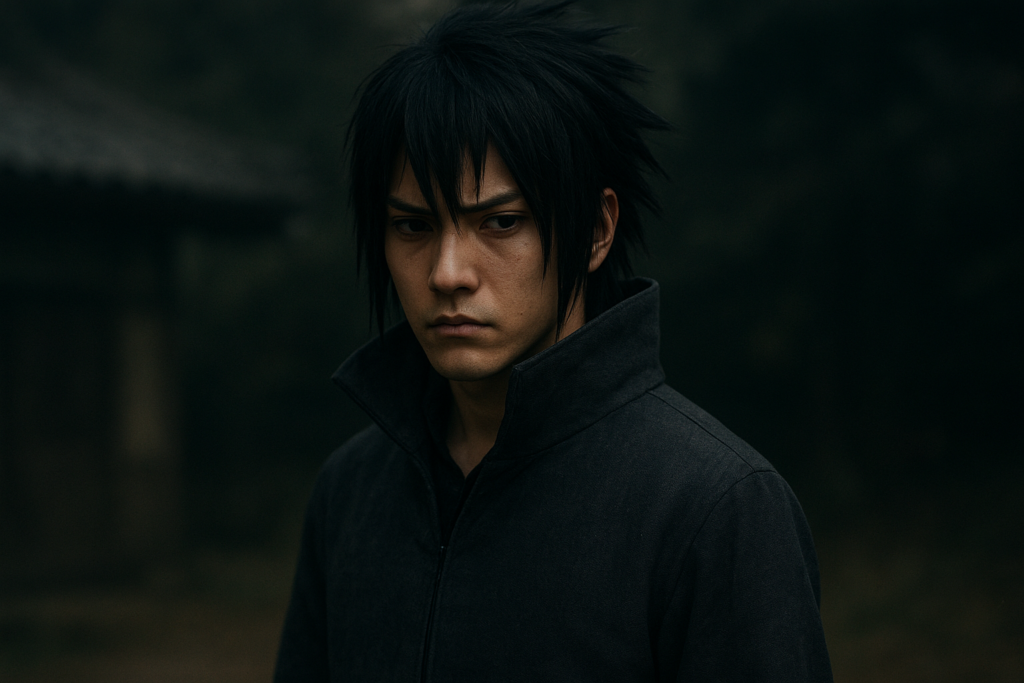
Within the vast landscape of modern storytelling, few characters generate as much complex discussion and emotional resonance as Itachi Uchiha. His narrative is a masterclass in layered deception, where every action is shrouded in multiple, often contradictory, meanings. To understand Itachi is to engage in a psychological excavation, peeling back the masks of the villain, the martyr, and the brother to uncover the profoundly burdened individual beneath. This analysis will dissect his character through the lens of his narrative function, his archetypal resonance, and a grounded psychological profile based on the Big Five personality traits.
Narrative Analysis
Itachi Uchiha’s primary function within the narrative is that of a living paradox, a narrative device that forces both the protagonist and the audience to constantly re-evaluate their understanding of truth, sacrifice, and villainy. He is not merely a plot twist but the central axis upon which the story’s core themes of hatred, peace, and legacy pivot. His motivations are deliberately obscured, presented first as pure, sociopathic ambition, then gradually revealed as a horrifying, self-sacrificial logic. This creates a powerful internal conflict that is never verbally articulated by Itachi himself; it is communicated through his meticulously calculated actions and their devastating personal cost. His dynamics with other characters, particularly Sasuke, are built on a foundation of profound lies meant to engineer a specific emotional outcome—hatred strong enough to fuel a quest for power, yet ultimately intended to be redirected. He manipulates the entire emotional trajectory of key characters, functioning less as a traditional antagonist and more as a tragic architect of destiny.
Archetypal Analysis
Itachi Uchiha is a profound synthesis and subversion of two powerful archetypes: the Tragic Hero and the Wise Mentor. Initially, he is presented as the archetypal Betrayer or Destroyer, annihilating his clan and family. However, the revelation of his true motives reframes him squarely within the Tragic Hero mold, one who commits an unspeakable act for a greater good as he perceives it, bearing the ultimate burden of becoming the villain to prevent a wider catastrophe. This sacrifice of his name, his relationships, and his soul is the essence of his tragedy. Simultaneously, he embodies the Wise Mentor or Guardian archetype, but in a uniquely twisted manner. His guidance for Sasuke is delivered through cruelty and trauma, a “tough love” pushed to its most extreme, nihilistic edge. He subverts the gentle, guiding mentor figure by becoming the dark mountain his brother must overcome, believing that only through conquering him can Sasuke achieve the strength and perspective needed for his own path. This fusion of the self-sacrificing hero and the ruthless teacher creates an archetype that is uniquely unsettling and memorable.
Psychological Profile: Big Five Personality Traits
Openness
Scale: very high
Itachi displays exceptional openness to experience, though it is channeled through a strategic, intellectual lens rather than artistic expression. His cognitive flexibility is extraordinary; he constantly engages in complex scenario planning, considering multiple future outcomes and crafting elaborate, multi-layered plans to achieve his ends. He does not accept the world as it is presented—he questions the very foundations of his clan’s ideology and the village’s political structure. This trait is evident in his ability to hold two completely contradictory roles in his mind for years: the loyal Konoha shinobi and the reviled clan-killer. His mental framework is not rigid; it is a dynamic system built on accepting painful, unconventional truths and acting upon them with brutal consistency.
Conscientiousness
Scale: very high
Itachi’s life is the epitome of extreme conscientiousness, defined by an almost inhuman level of discipline, duty, and order. Every action is deliberate, planned, and executed with flawless precision. His sense of duty, however, is internally defined and catastrophically burdensome. He takes ultimate responsibility for the fate of his clan and the stability of the village onto his own shoulders, a decision reflecting a profound, if misguided, sense of personal responsibility. His goal-oriented behavior is singular and relentless, sacrificing all personal desire on the altar of his mission. This trait explains his ability to maintain his cover for so long; his emotional control and adherence to his chosen role are a product of formidable self-regulation.
Extraversion
Scale: very low
Itachi is profoundly introverted. He is reserved, internally focused, and derives no apparent energy from social interaction. Even before his life as a rogue ninja, he was depicted as a solitary, quiet prodigy. His interactions are functional, not social. He exhibits low positive emotionality, rarely displaying joy or enthusiasm. His communication is terse, calculated, and often deliberately cold or antagonistic when dealing with Sasuke post-massacre. This introversion is not shyness but a deep inward focus, a necessity for someone carrying a secret of such magnitude. He lives almost entirely within the landscape of his own mind and mission.
Agreeableness
Scale: low
Superficially, Itachi’s actions place him at the extreme low end of agreeableness—he is antagonistic, uncompromising, and capable of immense cruelty. However, a deeper analysis reveals a critical nuance. His core motivation is not selfishness but a twisted form of altruism and compassion for his brother and the village. He subverts all prosocial behavior into horrific acts. He is not distrustful of others in a petty sense; he operates from a philosophical belief that direct kindness would lead to a worse outcome. Thus, while his behavioral output is low in agreeableness, the motivational engine is complex, blending a lack of straightforward cooperativeness with a devastating, self-sacrificial form of care.
Neuroticism
Scale: moderate (with very high specific facets)
Itachi presents a fascinating case in neuroticism. He exhibits remarkably low vulnerability and anxiety in the face of immediate threat or pressure; his composure in combat and high-stakes deception is unshakable, indicating strong emotional stability in execution. However, this likely comes at a tremendous internal cost. The weight of his actions manifests as a deep, pervasive depression and guilt, facets of neuroticism he suppresses completely. There is no emotional outburst, but a constant, quiet anguish visible only in his private moments. His psychological resilience is awe-inspiring, but it is a resilience built on compartmentalizing profound trauma, not an absence of it. His emotional stability in performance exists in direct tension with his profound internal turmoil.
Authorial Perspective
From an analytical standpoint, what I find most compelling about Itachi is not the grand tragedy itself, but the terrifying pragmatism of his methodology. He represents the logical endpoint of a certain type of utilitarian thinking, where love is expressed through inflicted pain and protection is achieved via annihilation. Writers often create tragic heroes, but few commit to the character’s chosen path with Itachi’s ruthless consistency. He doesn’t waver or seek solace; he fully becomes the monster he believes he needs to be. This makes him less a character to pity in a simple sense and more one to study as a philosophical proposition: what are the limits of sacrifice, and can a person ever recover from deliberately severing their own humanity? His story is a haunting exploration of the price of peace and the dark tools sometimes used to build it.
Conclusion
Itachi Uchiha endures as a landmark character because he transcends simple categorization. His narrative role as a tragic architect, his fusion of the martyr and mentor archetypes, and his complex psychological profile built on extreme conscientiousness and openness create a figure of enduring fascination. He resonates because he embodies a painful truth: that the greatest burdens are often borne in silence, and the most profound love can be hidden behind a mask of hatred. His legacy is a reminder that understanding a person’s psychology requires looking beyond their actions to the unbearable weights they choose to carry. In the end, Itachi is a testament to the human capacity for both immense destruction and unimaginable sacrifice, forever intertwined in a single, tragic life.