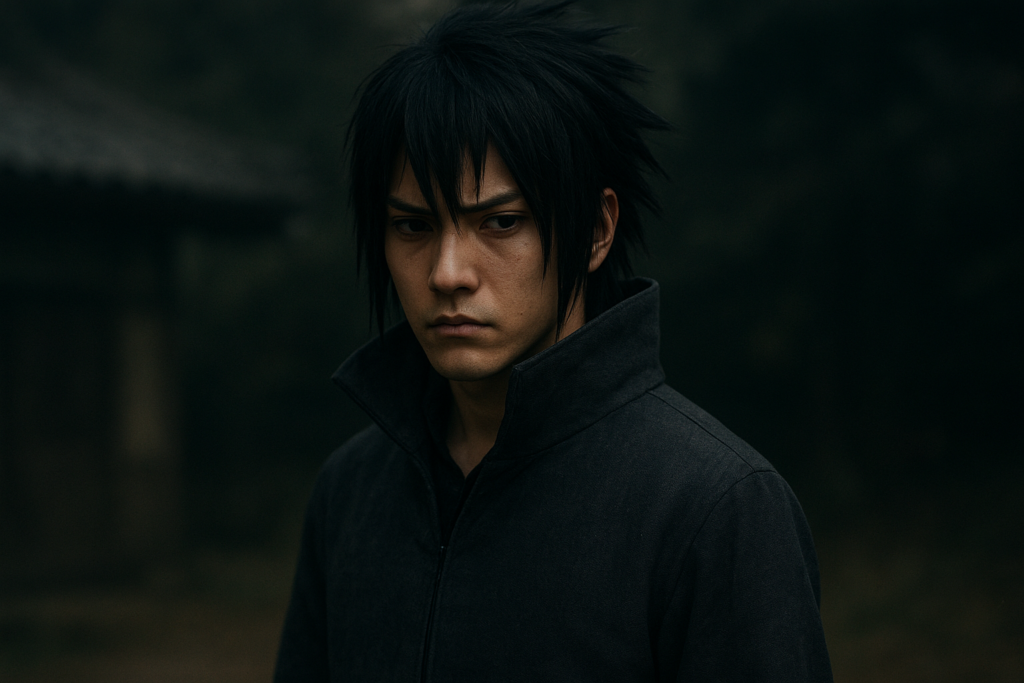
Within the pantheon of iconic antagonists, few command the sheer gravitational presence of Madara Uchiha. He is not merely a villain to be defeated; he is a philosophical force, a living myth whose worldview challenges the very foundations of his narrative universe. Analyzing Madara transcends simple hero-villain dichotomies, requiring a deep dive into his function as a narrative catalyst, his embodiment of timeless archetypes, and the complex psychological architecture that drives his apocalyptic vision. His character offers a masterclass in how absolute power, born from absolute trauma, can manifest as a form of misguided salvation.
Narrative Analysis
Madara Uchiha functions as the ultimate narrative endpoint for the series’ central theme: the cyclical nature of hatred and the quest for peace. He is not an external threat but the physical manifestation of the shinobi world’s accumulated failures. His role is to serve as an ideological and physical benchmark, forcing the protagonists to confront a version of “peace” so logically extreme it threatens to erase free will. His motivations are rooted in a profound disillusionment with reality itself, viewing the world as an inherently flawed system of suffering, betrayal, and loss. The internal conflict within Madara is fascinatingly static; his core belief—that the world is irredeemable as it is—solidifies early and never wavers. His dynamism comes from his relentless, millennia-spanning execution of a single plan. His character dynamics are defined by a profound loneliness and a twisted sense of legacy. He sees others either as tools (Obito, the Ten-Tails), worthy rivals (Hashirama), or ignorant children clinging to a broken world (the Allied Shinobi Forces). Every interaction reinforces his self-imposed isolation as the only being capable of seeing the “truth” and having the will to act upon it.
Archetypal Analysis
Madara Uchiha predominantly embodies the Philosopher-King and Fallen Messiah archetypes, with a heavy undercurrent of the Trickster in his machinations. The Philosopher-King is evident in his grand, systematic vision for humanity. He doesn’t seek chaos; he seeks a perfectly ordered, painless existence, believing himself the only one wise and powerful enough to impose it. This bleeds directly into the Fallen Messiah archetype. He begins with a genuine, if ambitious, desire to protect his clan and create a haven, a messianic impulse. His fall is triggered by repeated betrayals—by the world, by his clan, and by his own perception of Hashirama’s idealism—which corrupts his salvation into a tyrannical, universal delusion. Finally, the Trickster manifests in his elaborate, behind-the-scenes scheming. He manipulates events, people, and even his own death across decades, treating the entire world as a board for his cosmic game. This subverts the typical brute-force antagonist, presenting a strategic mastermind who believes the greatest trick he’ll ever pull is convincing the world to happily embrace its own oblivion.
Psychological Profile: Big Five Personality Traits
Openness
Scale: very high
Madara exhibits exceptionally high openness to experience, though channeled toward a singular, dark purpose. He is intellectually curious, constantly seeking deeper truths about the world, chakra, and human nature, as evidenced by his study of the Uchiha Stone Tablet and the Rinnegan. He is highly imaginative, but his imagination is directed toward envisioning radical, world-altering possibilities like the Infinite Tsukuyomi. He rejects tradition and conventional paths to peace, displaying a strong need for cognitive closure through his own absolute solution. This trait is the engine of his grand vision, demonstrating a personality structure built on a foundation of unconventional, system-level thinking.
Conscientiousness
Scale: very high
His conscientiousness is monumental, defined by extreme order, dutifulness, and achievement-striving—all perverted toward his goal. His behavioral patterns show meticulous, long-term planning and an unwavering discipline that spans literal lifetimes. He sets the “Moon’s Eye Plan” as his ultimate duty and pursues it with relentless self-discipline, leaving nothing to chance. This isn’t conscientiousness in a prosocial sense, but a dark mirror of it: a fanatical devotion to a self-appointed task, showcasing immense willpower and a compulsion for total control over outcomes.
Extraversion
Scale: low
Madara is fundamentally introverted. He does not seek social stimulation or affirmation from others. His early life involved camaraderie with Hashirama and leadership of his clan, but his later years are defined by profound isolation. He operates alone or through proxies, finding groups and consensus to be weaknesses. His assertiveness and dominance, which might be misconstrued as extraversion, are expressions of his will, not a desire for social engagement. He is a solitary force, and his character motivation stems from internal convictions, not external validation.
Agreeableness
Scale: very low
This is arguably his lowest trait. Madara displays almost no trust, altruism, modesty, or compliance. His interactions are transactional or coercive. He is antagonistic, viewing anyone not aligned with his plan as an obstacle. There is a stark absence of empathy for the individual desires of humanity; he believes he knows what is best for all, rendering their consent irrelevant. This profound lack of agreeableness is central to his psychological profile as an antagonist, as it allows him to pursue a utopian vision through utterly ruthless means without moral hesitation.
Neuroticism
Scale: moderate (with specific high facets)
Madara’s neuroticism presents a complex picture. He is not emotionally volatile or anxious in a typical sense; his emotional intelligence is cold and calculating. However, specific facets are pronounced. His anger (hostility) is a deep, simmering constant, directed at the world’s structure. More critically, he exhibits high vulnerability—not to everyday stress, but to the existential pain of reality. His entire plan is a maladaptive coping mechanism for this vulnerability, an attempt to erase the source of all emotional pain permanently. The trauma of losing his brothers and his shattered dream with Hashirama cemented a personality development path where he sought to armor the world against suffering by removing its capacity to feel.
Authorial Perspective
From an analytical standpoint, what I find most compelling about Madara is the terrifying purity of his logic. He is the embodiment of a perfectly rational solution to an emotional problem, taken to its most extreme conclusion. While I disagree with his premise and his method on a fundamental level, the narrative doesn’t frame him as simply insane. It grants his diagnosis of the world’s ills a certain bleak validity, which is what makes him such a formidable ideological opponent. He forces the hero to defend a flawed, painful, but authentic reality against a perfect, peaceful illusion. This elevates the conflict from a simple battle of strength to a philosophical war for the soul of human experience.
Conclusion
Madara Uchiha’s significance lies in his completeness as a narrative and psychological construct. He is a dark prophet whose character motivation is rooted in a tragically understandable desire to end suffering, yet warped by isolation, power, and trauma into a monomaniacal tyranny. His psychological profile reveals a mind of formidable intellect and will, catastrophically misaligned with human empathy. He resonates because he represents the ultimate endpoint of nihilism answered with absolute control, a warning of how the quest for a perfect world can destroy the worth of the real one. In the end, Madara stands as a monument to a specific kind of tragic grandeur: the fallen hero who became the ultimate villain, not for love of evil, but from a failed love for a world he deemed too broken to save.